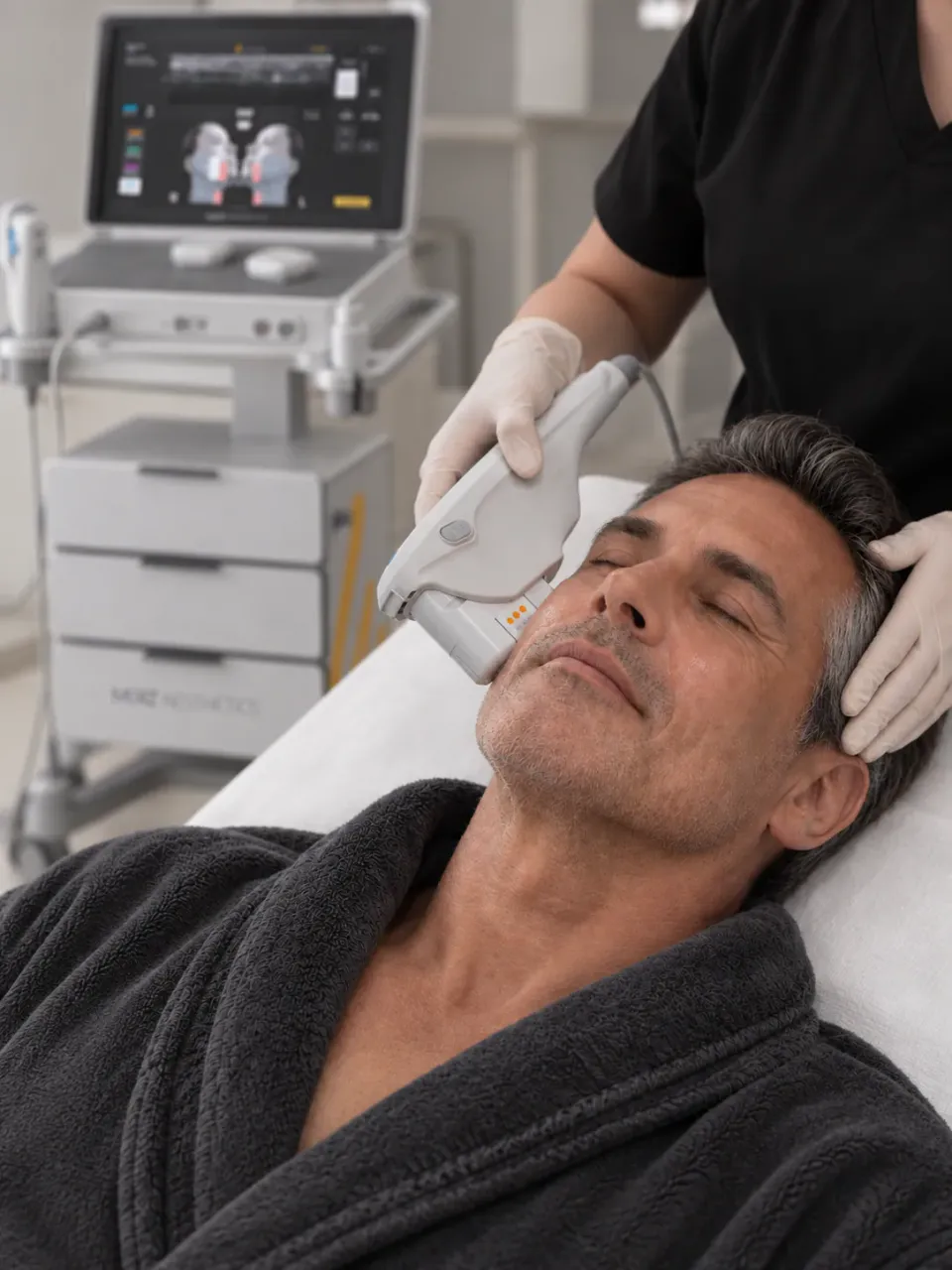



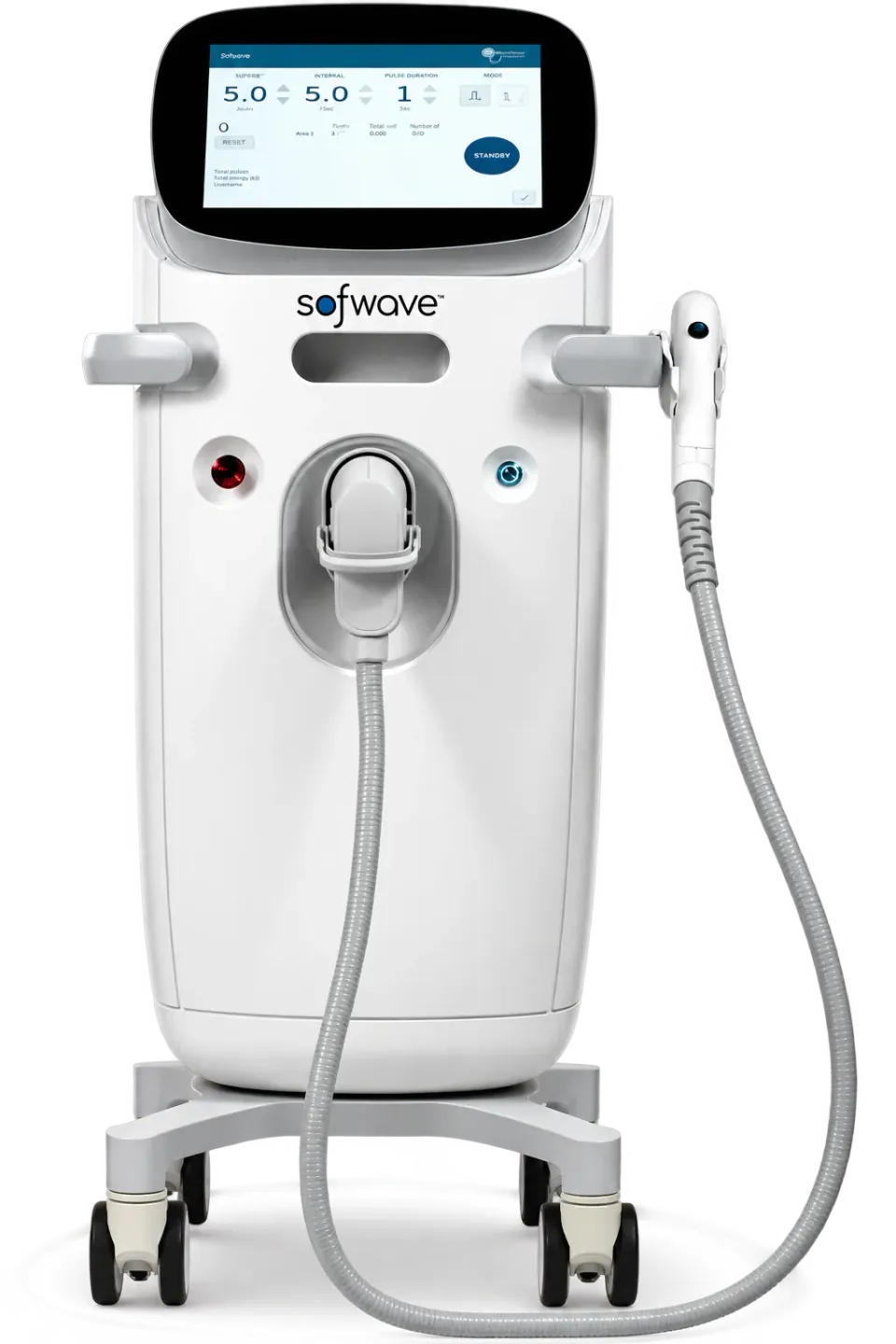
Sofwave delivers ultrasound into the middle layer of the dermis to stimulate collagen remodelling. For someone concerned about fine creases or mild skin looseness, that may translate into a modest improvement in firmness over the following months. Sofwave does not remove excess skin or replace lost volume. Results vary and are not permanent.
A useful starting point at Dr Jinah Yoo's Mayfair clinic in London is a simple question. When you say you want your neck or cheeks to look firmer, what particular feature do you mean? Fine lines that remain when your face is relaxed, a shadow under the chin and folds that appear only when you turn your head can all prompt the same enquiry. They need different assessments.
What happens beneath the Sofwave handpiece?
The dermis contains collagen fibres that give skin much of its strength. Sofwave sends parallel beams of ultrasound through the surface to create narrow zones of heating at a planned depth within that layer. The aim is to stimulate a repair response that gradually changes the collagen there. A cooling system at the handpiece helps protect the surface while energy is delivered beneath it.
This explains two things patients often wonder about. The surface can look relatively unchanged when you leave, even though the tissue underneath has been treated. And a sensation of heat during the appointment tells you little about the eventual degree of improvement. The clinic's Sofwave device page shows the equipment and describes the areas considered for treatment.
Which kinds of lines are worth discussing?
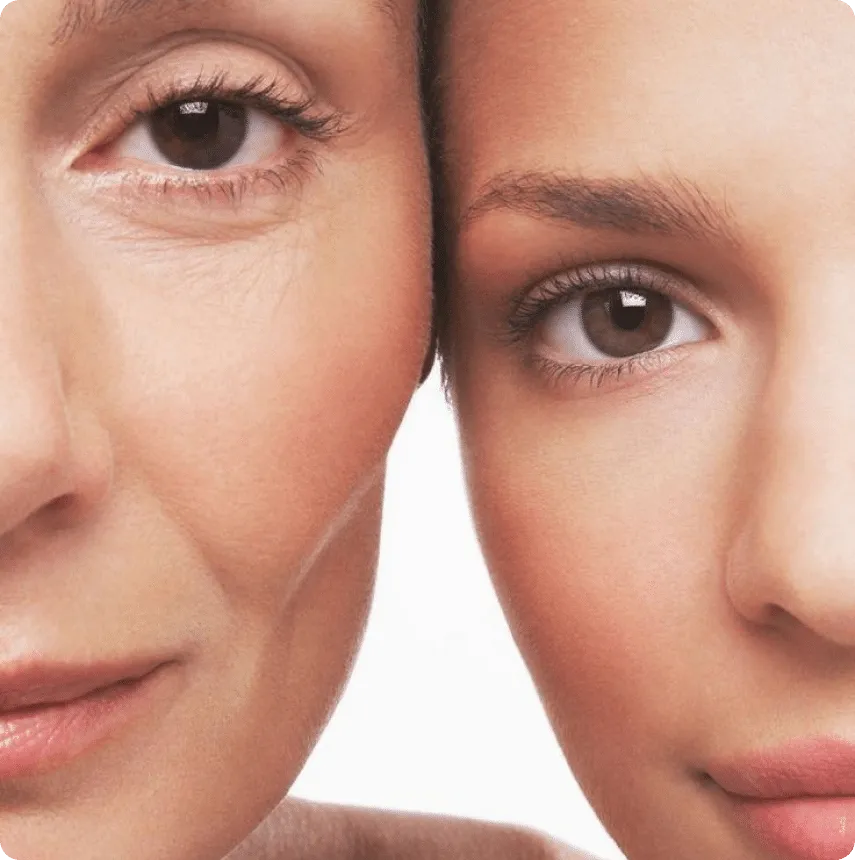
Look at the area in ordinary daylight with your face relaxed. A fine network of creases across the cheek or upper chest looks different from a single deep fold where tissue bends with movement. A practitioner can assess skin quality, elasticity and how the tissue moves. They may find that mild dermal laxity contributes to the appearance, or that the visible feature has another cause.
On the neck, for example, you may notice a change in texture as well as fullness beneath the jaw. A treatment intended to improve texture might leave the outline of the jaw largely unchanged. It helps to name which of those features bothers you more. That gives you and the practitioner something concrete to revisit when you weigh up cost, discomfort and the possibility of little visible change.
Pigmentation and surface roughness can also make a patch of skin look older or more uneven. Describe any patch that is new, changing, bleeding or persistently irritated. Have it assessed before arranging an aesthetic procedure over it.
How does Sofwave compare with Ultherapy?
Both use ultrasound, but the treatment plans can be quite different. Sofwave aims at a band within the dermis. Ultherapy PRIME uses focused ultrasound at selected depths and includes imaging so the practitioner can view tissue layers while treating. If you are interested in a gradual lifting effect under the chin, it is worth asking which layer is contributing to the looseness there and how the proposed treatment addresses it.
If you are mainly concerned about creasing on the upper chest, a discussion about skin quality may be more relevant. Two people of the same age could therefore leave with different recommendations. The clinic's guide to lifting and tightening devices explains where radiofrequency and other technologies fit into that discussion.
What should you disclose at the assessment?
Take a list of medicines and details of previous procedures in or near the area. Include implanted devices, surgery, fillers and energy treatments, even if they took place elsewhere. If you have reacted to a previous treatment, describe what happened and how long it lasted. Photographs can help when a reaction has already settled.
Mention any active rash, infection, wound or tendency to develop dark marks after skin inflammation. Tell the practitioner if you are pregnant or if a medical condition affects healing or sensation. Your medical history, skin examination and the instructions for the device all inform whether treatment is appropriate. An assessment can end with a decision to wait.
What might treatment and recovery feel like?
The practitioner moves a handpiece over the planned area in a series of placements. You can feel heat during each pulse despite the surface cooling. Ask in advance how discomfort is managed, who will deliver the treatment and how to signal that you want a pause. You need to be able to explain what you feel throughout the session.
Afterwards, skin can be red, swollen or tender. Some people can get on with their day while the skin settles, but a public-facing shift or an event that evening may feel different from a quiet day at home. Burns, blistering and changes in pigmentation are possible. Request written aftercare, including when to resume your usual products and whom to contact if you are worried. Seek prompt advice for blisters, increasing pain or a change that worsens after you leave.
How can you tell whether it has helped?
Choose one feature and record it before treatment. For neck texture, take a photograph looking straight ahead with your chin in a comfortable neutral position. Use the same light and distance at follow-up. Looking down at a phone in one photograph and holding your head high in another can change the appearance of a neck crease more than a subtle treatment effect.
Agree when to review the result. Collagen remodelling takes time, and a firmer sensation or a smoother appearance straight after treatment can reflect temporary swelling. If you see little change after the agreed review period, ask whether the original goal is one the device can reasonably achieve. Booking another session is a separate decision.
Frequently asked questions
Is Sofwave suitable for darker skin?
Ultrasound acts through sound energy and does not need to target skin pigment. Skin tone alone therefore tells you relatively little about suitability. Inflammation can still leave darker or lighter marks. Discuss your history of pigment changes, the proposed treatment area and how the clinic would manage a reaction.
How many appointments should I plan for?
The Mayfair clinic describes a typical course of one to two treatments. That is a starting point for discussion. Ask how the practitioner decides whether a second session would add anything, what the whole course would cost and when you would both review the outcome.
Will it change the way my face moves when I smile?
The intended target is collagen-containing tissue in the skin. Expression lines that appear when you smile or raise your eyebrows can remain. Show the practitioner the concern both at rest and during movement so that the expected change is clear before you decide.
Is there a good time to have it before a wedding?
Work backwards from the event with the practitioner. Allow for both visible recovery and the longer interval before any change in firmness becomes apparent. If the occasion is close, waiting until afterwards avoids having to predict how your skin will look on a particular day.
For an individual assessment of skin texture or laxity, request a consultation at the London clinic.