


Ultherapy uses focused ultrasound to heat small points beneath the skin. As the tissue repairs and remodels, some people with mild to moderate looseness see a subtle lift under the chin, along the neck or around the brow. The change develops over months and is temporary. If your main concern is a hollow cheek, a dark patch or a large fold of excess skin, ultrasound is unlikely to give you the change you have in mind.
At consultant dermatologist Dr Jinah Yoo's Mayfair clinic in London, the device used is Ultherapy PRIME. One feature is particularly relevant when weighing up treatment. The practitioner can see an ultrasound image of the tissue beneath the handpiece. What does that add, and how much difference might you actually see in the mirror?
What does the ultrasound image tell the practitioner?
Imagine tracing a finger from the soft area beneath your chin towards the edge of your jaw. The thickness and feel of the tissue change along the way. The same nominal treatment depth can therefore reach different structures at different points. Looking at the surface alone gives only part of the picture.
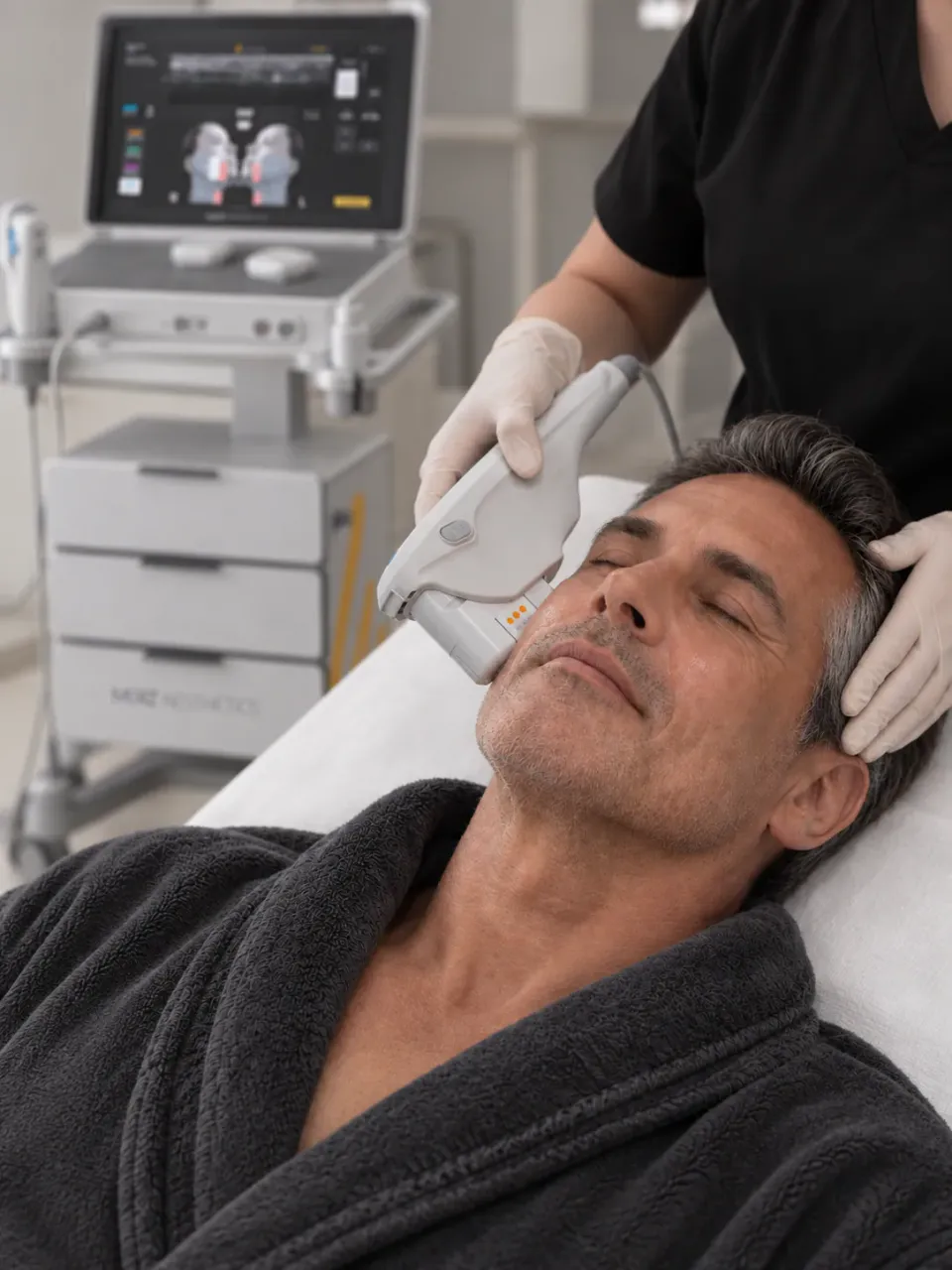
With PRIME, the practitioner places the transducer against the skin and views a cross-section on screen. This helps them identify tissue layers, check contact and decide where to deliver energy. They can plan around the dermis, the supportive part of the skin, and deeper connective tissue where appropriate. The image guides the person delivering the treatment. It cannot predict how much lift your skin will develop.
Why does the result take months?
The pulses create small, separate areas of heat at the selected depth. The tissue response includes changes to collagen, one of the proteins that gives skin its strength. Making and reorganising collagen takes time. A photograph taken immediately afterwards can show swelling and tells you little about the eventual result.
The clinic describes two to three months as a useful point to look for changes, with further improvement possible up to around six months. Some people notice very little. When comparing photographs, use the same lighting, camera height and head position. Tilting the chin up, even slightly, stretches the neck and can make an apparent improvement difficult to interpret.
Which changes around the jaw or brow might respond?
Mild looseness beneath the chin is one reason to consider assessment. A soft jawline, however, can also reflect the shape of the chin, the position of fat or a loss of facial volume. Each gives a different answer to the question of whether ultrasound is worthwhile. One useful way to describe your concern is to show where you notice it with your face relaxed, then explain what you would consider a meaningful change.
The same distinction matters around the eyes. A change in brow position and an overhanging upper eyelid can look similar in a photograph. A practitioner needs to assess which structure is involved before discussing treatment. A newly drooping eyelid or a change affecting vision deserves medical assessment before any cosmetic decision.
If you are hoping to remove excess skin or substantially reposition the lower face, ask what a surgical consultation would add. A non-surgical approach can produce a smaller change than you may want. Choosing to leave the area alone is also reasonable, particularly if a subtle improvement would make little difference to you.
What happens before and during a session?
Bring a list of your medicines and tell the practitioner about implants, recent dental or facial procedures and any previous treatment in the area. If you have had filler, explain where it was placed and when. Flag any broken skin, inflammation or change in sensation. These details help determine whether treatment should go ahead, be adapted or be deferred.
Ask the practitioner to identify the exact area they propose to treat, show you where that ends and explain why. Someone interested in their neck may assume that a quoted face treatment includes the area beneath the chin. A plan in writing makes it easier to compare options and to check what follow-up is included.
During treatment, gel helps the handpiece make contact. You may feel brief pulses of heat, tingling or discomfort, and the sensation can vary between neighbouring areas. Discuss comfort measures in advance. Tell the practitioner if a pulse feels particularly painful or if you want to pause. There is no reason to judge whether treatment is working by how uncomfortable it feels.
What are the risks and when should you seek advice?
Redness, swelling, tenderness and bruising can follow treatment. Some people experience altered sensation or temporary weakness. Burns and nerve injury are possible. Ask for the risks specific to your treatment area and medical history, and for written aftercare with a contact number before you leave.
Contact the treating team promptly if you develop blistering, increasing pain, persistent numbness or a change in facial movement. Sudden facial weakness, especially with speech difficulty or arm weakness, needs emergency assessment. In the UK, call 999 if you suspect a stroke. Avoid assuming a new symptom is simply part of recovery.
How does Ultherapy compare with Thermage or Sofwave?
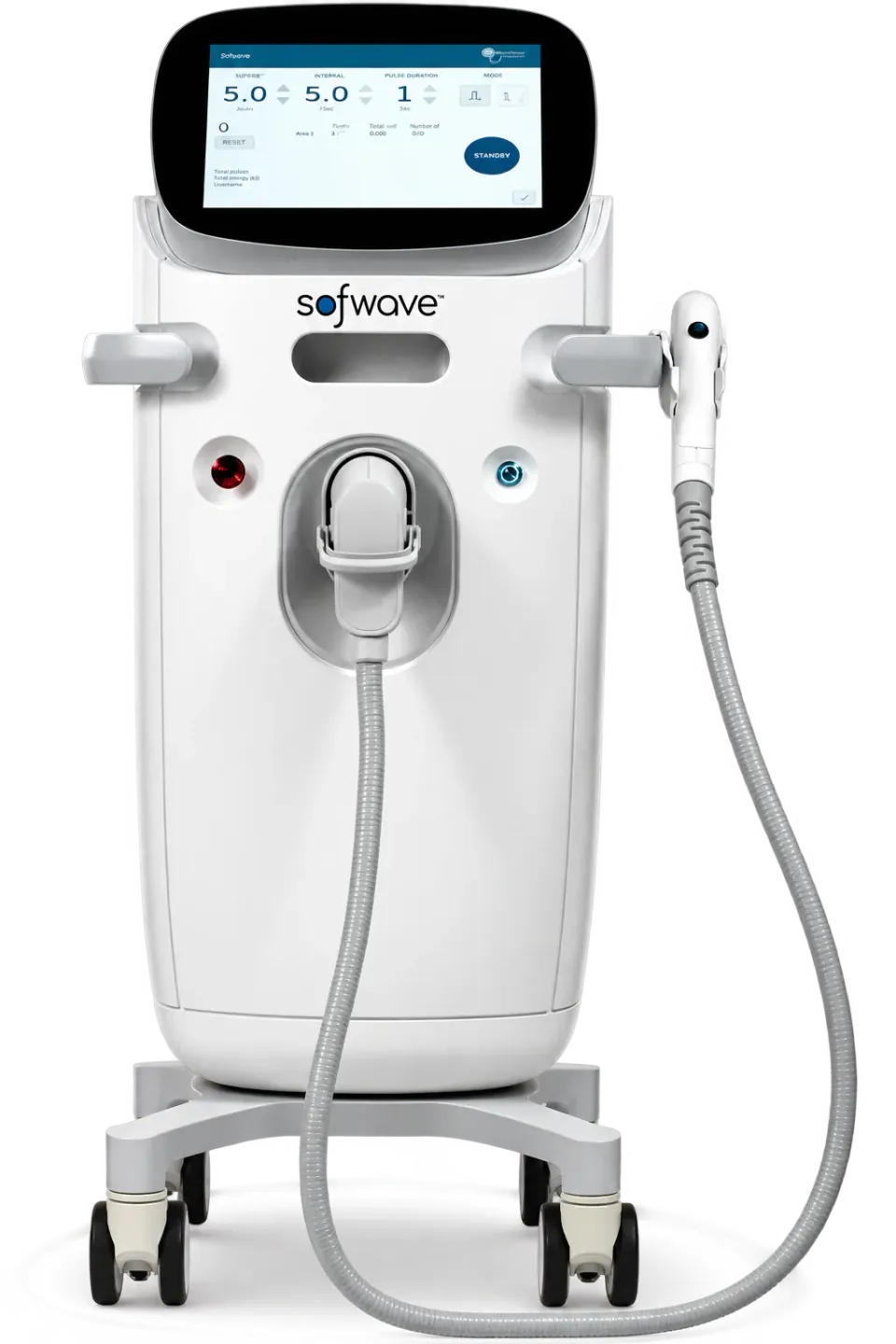
Thermage FLX uses radiofrequency to heat tissue. Sofwave uses ultrasound aimed at the middle of the dermis. Ultherapy allows the practitioner to select focal depths and use imaging during delivery. These differences matter when a practitioner connects them to a specific finding on examination. A device that reaches deeper tissue is only useful if that is where the relevant concern lies.
For example, a person describing a fine, creased texture on the neck may have a different goal from someone concerned about mild looseness beneath the chin. Ask which change the proposed device is meant to produce, where you might see it and what would remain visible. The clinic's comparison of Thermage and Ultherapy discusses the two technologies in more detail.
Frequently asked questions
How long does the lift last?
There is no fixed expiry date. The effect varies, and skin continues to change with age. If you are considering another session, compare current photographs with your starting point and discuss whether there is a worthwhile target for further treatment.
Can I go back to work afterwards?
Many people resume ordinary activities soon afterwards. Tenderness can matter even when the skin looks normal, and swelling or bruising can be visible. If you have an important presentation or family event coming up, tell the clinic the date before deciding when to proceed.
Can I try a small area first?
Ask whether the area you have in mind makes sense anatomically and what a limited treatment could show. A response in one part of the face does not establish how another part will respond. Make sure the agreed plan matches the area you expect to review later.
What if I see no difference at review?
Bring the original photographs and identify the feature you hoped would change. Ask whether enough time has passed, whether laxity was the main cause and what further treatment could realistically add. You can finish with a review and choose no further sessions.
To discuss your own concern in London, request a consultation with the Mayfair clinic.