
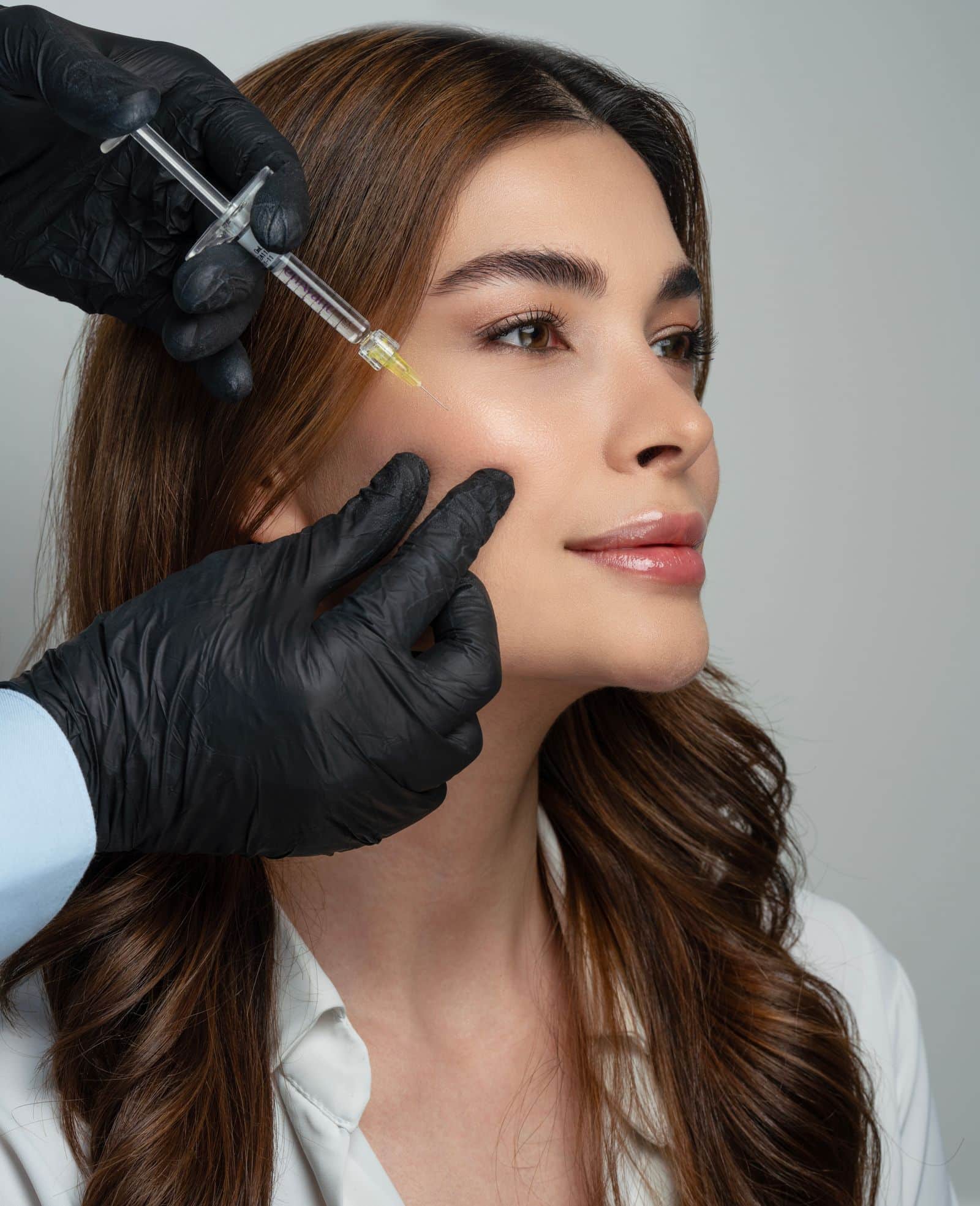
Dermal fillers are among the most popular aesthetic treatments in London, yet they are also among the most variable in quality and safety. The result depends enormously on who performs the treatment, their understanding of facial anatomy, and their judgement about how much is enough. Done well, fillers can look entirely natural. Done poorly, they can look obvious or carry real risk.
At our Mayfair clinic, dermal fillers are carried out by consultant dermatologist Dr Jinah Yoo, with an emphasis on subtle, balanced results and patient safety. This guide explains what fillers are, what they can treat, and what genuinely matters when choosing where to have them.
What Are Dermal Fillers?
Dermal fillers are gels that are injected into or beneath the skin to restore volume, smooth lines and refine facial contours. Most modern fillers are based on hyaluronic acid, a substance that occurs naturally in the skin and helps it hold moisture and structure.
Because hyaluronic acid fillers are temporary, the effect gradually softens over time as the product is broken down by the body. This is often an advantage, as it allows results to be adjusted and refined over the longer term rather than being permanent.
What Dermal Fillers Can Treat
Fillers are versatile and can be used across the face. Common uses include:
- Lines and folds – softening nasolabial lines and marionette lines around the mouth.
- Cheeks – restoring volume that is lost with age to support the mid-face.
- Lips – adding subtle volume, definition or hydration.
- Chin and jawline – refining contour and balance, sometimes described as facial contouring.
- Under-eye area – addressing hollowing in suitable candidates, an area that requires particular skill.
Not every concern is best treated with filler, and part of a good consultation is recognising when another option, such as skin boosters or a different treatment, is more appropriate.
How Dermal Fillers Work
When injected, filler adds volume and structure exactly where it is placed. Depending on the product and the area, it can lift, contour, smooth or hydrate. Hyaluronic acid also attracts water, which contributes to the fresh, supported look that fillers can give.
Results are visible immediately, although the final outcome settles over the following days as any swelling resolves. How long fillers last varies with the product, the area and the individual, typically ranging from several months to well over a year.
Why a Doctor-Led Approach Matters
This is the most important point about dermal fillers. In the UK, the aesthetics industry is not as tightly regulated as many people assume, and fillers can be administered by people with very limited training. This is where avoidable problems arise.
A consultant dermatologist brings a deep understanding of facial anatomy, including the position of blood vessels, which is essential for both safety and natural-looking results. Doctor-led treatment also means that, in the rare event of a complication, it can be recognised and managed promptly. Choosing a qualified medical practitioner is the single most effective way to reduce risk.
What to Expect
Treatment begins with a consultation and facial assessment, where your concerns are discussed and a plan agreed. This conversation matters as much as the treatment itself, because it establishes realistic goals and the right amount of product.
The treatment itself is usually quick. A fine needle or cannula is used, often with numbing for comfort, and results are visible straight away. Some swelling, redness or minor bruising is common in the first few days. Most people return to normal activities quickly, with the final result settling within a week or two.
Are Dermal Fillers Safe?
When carried out by an experienced medical practitioner, dermal fillers have a good safety record, but no treatment is without risk. Common, temporary effects include swelling, redness, bruising and tenderness. Less commonly, lumps or unevenness can occur, which can usually be addressed.
More serious complications, such as the filler affecting a blood vessel, are rare but important, and they are a key reason to choose a doctor who understands facial anatomy and can act quickly. One advantage of hyaluronic acid fillers is that they can usually be dissolved if needed, which adds a layer of reassurance.
Certain factors can make filler unsuitable, including some medical conditions, active skin infections in the area, and pregnancy. Your suitability is always assessed at consultation.
Achieving Natural Results
The hallmark of good filler work is that it does not look like filler. The aim is to restore balance and freshness, not to change your face or add obvious volume. This means treating the right areas, using an appropriate amount, and sometimes advising against treatment where it would not help.
A measured, conservative approach, refined over time, almost always looks better than doing too much at once. This philosophy of subtle enhancement guides every treatment.
The Dr Jinah Yoo Approach
Fillers are a medical treatment and deserve a medical approach. As a GMC-registered consultant dermatologist, Dr Jinah Yoo treats them accordingly:
- A full facial assessment comes before any treatment, with realistic goals agreed together.
- Treatment is doctor-led, with anatomy and safety at the centre.
- A conservative, natural approach is favoured over dramatic change.
- Honest advice is given, including when filler is not the right answer.
You can read more about Dr Jinah Yoo and her approach to injectable treatments.
Frequently Asked Questions
How much do dermal fillers cost in London?
Cost depends on the area treated, the type and amount of filler used, and the complexity of the treatment. Because every face and plan is different, a clear price is provided after your consultation, once your goals have been assessed and agreed.
Can I have fillers if I have an autoimmune condition?
Some medical conditions, including certain autoimmune conditions, can affect whether fillers are suitable. This is exactly the kind of factor that a medical consultation is designed to assess. Always discuss your full medical history so your dermatologist can advise on suitability and safety.
What is the difference between fillers and anti-wrinkle injections?
They do different things. Dermal fillers add volume and smooth lines by filling, while anti-wrinkle injections work by relaxing the muscles that cause certain expression lines. Which is appropriate, if either, depends on your concern and is determined during a medical assessment rather than chosen in advance.
Which filler is best for lines around the mouth?
There is no single best filler, because different products suit different areas and depths. Fine lines around the mouth need a delicate approach and an appropriate product, selected by your practitioner based on your skin and the result you want. This is decided at consultation.
How long do dermal fillers last?
This varies with the type of filler, the area treated and your individual metabolism. As a general guide, hyaluronic acid fillers tend to last from several months to well over a year before gradually softening. Your dermatologist will give you a realistic estimate for the specific treatment you have, along with advice on maintenance.
Arranging a Consultation
If you are considering dermal fillers in London and want a safe, natural and doctor-led approach, the best starting point is a proper consultation. You are welcome to book a consultation with Dr Jinah Yoo at our Mayfair clinic.