Mole Removal
At Dr Jinah Yoo Dermatology, we provide expert mole removal in London, offering personalised care to achieve safe, precise, and aesthetically pleasing results.
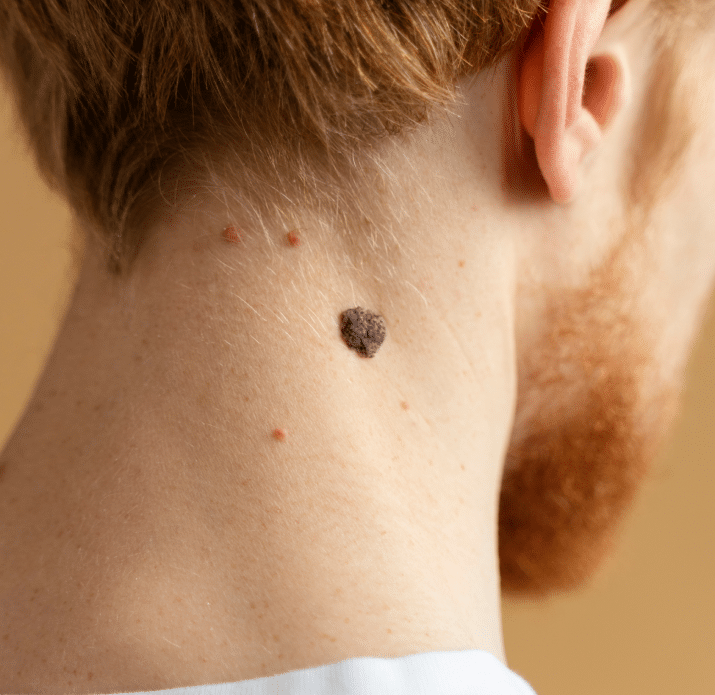








Moles are common skin growths that can vary in size, shape, and colour. While most moles are harmless, some may require removal due to medical concerns, such as a suspicious mole potentially indicating skin cancer or for cosmetic reasons, particularly when affecting the appearance or causing discomfort.

Fast, pain free results
What are Moles?
Moles are common skin growths caused by clusters of pigment cells called melanocytes. They can appear in various forms, from flat, dark spots to raised moles, and may develop anywhere on the body. Dark patches of skin that can be congenital, common, or atypical.
Most moles are harmless and present at birth (congenital moles) or develop during childhood and adolescence (common moles).
However, some moles (atypical moles) have irregular features that require closer monitoring as they can carry a higher risk of turning into skin cancer, particularly malignant melanoma. Moles that change in size, shape, or colour, or cause irritation, should always be examined by a consultant dermatologist.
How We Treat Moles at Dr Jinah Yoo Dermatology
At Dr Jinah Yoo Dermatology, we are specialists in removing a wide range of skin lesions, including moles, skin tags, and other common growths. Our approach begins with a comprehensive physical examination and, if necessary, diagnostic tests to ensure an accurate diagnosis. Once confirmed, we recommend the most appropriate treatment to achieve the best results with minimal impact on the surrounding skin.
Laser Removal
Laser removal uses light energy to break down the pigment cells within the mole. This is an ideal option for facial mole removal or smaller lesions, as it is a safe and simple procedure with minimal risk of scarring. However, laser treatments are not recommended for moles with a personal or family history of malignant melanoma or other skin cancers.
Shave Removal
Skin lesions that protrude from the skin can be ‘shaved’ off after a numbing injection. This procedure is carried out with a blade, and afterwards, the wound base is burnt off with hot diathermy as a precaution to stop bleeding from any vessels. Once the mole is removed, there is a chance of a pink mark on your skin, but this normally fades away over time.
Excision Removal
Surgical excision is a preferred method for moles that are deeper-seated in the skin or those with suspicious characteristics. This involves cutting away the mole in an elliptical shape under local anaesthetic, followed by stitches to close the wound. While this method may leave a small scar, its effectiveness ensures the removal of the entire mole and reduces the risk of recurrence.
Why Our Mole Removal Treatments Are Special

Expert-Led Care
Our treatments are guided by experienced skin doctors who specialise in dermatology and skin lesion removal, ensuring every procedure is performed with precision and expertise.

Advanced Laser and Surgical Techniques
We use cutting-edge laser technology and surgical methods that target the affected area precisely, minimising impact on surrounding skin and promoting rapid healing. Our technology is designed to safely treat a variety of moles, including those in sensitive areas.

Customised Treatment Plans
Recognising that each patient’s skin and mole type is unique, we develop personalised treatment plans that provide the best chance for effective mole removal.

Minimally Invasive Options
Our techniques offer minimally invasive solutions that involve little to no downtime so patients can return to daily life quickly and confidently.

Long-Term Care and Prevention
In addition to treatment, we provide detailed aftercare plan that meets the need of each patient. The purpose of this aftercare advice is to help patients maintain their results and minimise the risk of the wart returning. We emphasise patient safety and comfort throughout the entire process. Our goal is to help our patience achieve clear, healthy skin with confidence. Our clinic’s reputation for high-quality care and effective results makes us one of London’s leading providers of mole removal treatments, helping patients achieve clear, healthy skin with confidence.
Rated 5 star by hundred’s of people across the UK, USA and Korea...
The staff was welcoming, and the therapist was knowledgeable and attentive. The clinic is clean and modern, and I am very pleased with my treatment results. Highly recommend!

I had a great experience here at Dr Jinah Yoo! I had the ‘brightening’ treatment after having too much sunburn on my summer vacation, and it really helped. The process was very enjoyable thanks to the skillful and gentle practitioner. I will come back in the future if I have any needs for skin improvements!

A perfect experience! I had the Dermal Tightening Programme which is for lift up. The therapist is very professional and the environment is also very helpful for relaxing. Nice location as well.

Absolutely love the place. Had some moles removed from my face by Dr Yoo. A week later there is not the slightest indication that there was ever even anything there. Results are incredible.
Our mole removal treatments are ideal for individuals who:
- Have suspicious moles or lesions that need to be examined.
- Wish to remove raised moles, facial moles, or other benign moles for cosmetic reasons or to prevent irritation.
- Are concerned about changes in their moles, such as rapid growth, irregular borders, or colour variation, which could indicate potentially dangerous mole cells.
- Seek safe, effective treatment options to address skin lesions while achieving minimal scarring and a natural-looking outcome.
- Require expert guidance and personalised care for managing skin tags, small moles, or other types of growth.


Based in Mayfair, London
Pioneered by Dr. Jinah Yoo
Dr Jinah Yoo is a Korean UK-trained consultant dermatologist who is the founder and medical director of Dr Jinah Yoo Dermatology.
Dr Yoo has completed intensive dermatology training and developed special interest in cosmetic dermatology, hyperpigmentary disorders and skin lymphoma. She has completed two Master’s degrees in addition to her medical training and has been awarded Distinction in MSc (Skin Medical and Procedural Dermatology) at the University of Manchester. Spending the final year of her MSc doing her projects on facial hyperpigmentation equipped her with scientific knowledge on aetiology and evidence-based approach in the management of hyperpigmentation.
She attended numerous observerships at the World’s leading pigment/cosmetic dermatology clinics in USA, Singapore and South Korea and established the first NHS-based hyperpigmentation service at Queen Elizabeth Hospital in 2018.
She has been elected to Royal College of Physician fellowship (FRCP) for her ongoing contribution to the advances in dermatology specialty. She is actively involved in education and research and her works are regularly presented at national/international conferences and published in peer-review journals.
FREQUENTLY ASKED QUESTIONS
Mole Removal FAQ’s
How do I know if I need a mole removal?
If you start to notice any changes in the size, shape, or colour of a mole, or if it becomes painful or irritated, it is important to book a mole removal appointment. Additionally, moles with irregular edges or multiple colours should be assessed by a dermatologist, as they could indicate cancerous moles that require further evaluation.
Are all moles removed for medical reasons?
Not all moles removed are for medical reasons. Many patients opt for cosmetic mole removal to enhance their appearance or to eliminate moles that are raised or located in areas of discomfort, such as where clothing or jewellery may irritate the skin.
What are the options for removing moles?
At Dr Jinah Yoo Dermatology, we offer various mole removal procedures, including:
Laser mole removal: Best for smaller, benign moles on visible areas such as the face, offering minimal scarring.
Shave excision: Ideal for removing moles that are raised or protruding.
Surgical excision: Recommended for deeper or cancerous moles, ensuring the mole is completely removed, often with follow-up pathology testing.
Each mole removal procedure is tailored to your specific needs, prioritising safety and cosmetic outcomes.
Is mole removal surgery painful?
Patients are given local anaesthetic for mole removal surgery, which makes the process comfortable for them. Most patients report experiencing minimal discomfort during and after the procedure, and our team provides clear aftercare guidance to ensure smooth healing.
What is the recovery process after having a mole removed?
The recovery process depends on the mole removal treatment used. For surgical excision, stitches may be required, and you’ll be advised to keep the area clean and protected. With laser treatment, healing is faster, and there’s minimal downtime. Regardless of the method, you’ll be given personalised aftercare instructions to promote proper healing.
Is laser mole removal suitable for everyone?
Laser mole removal is a great option for patients looking to remove benign or superficial moles, particularly on the face or other visible areas. However, it is not recommended for cancerous moles or moles with a history of skin cancer. In such cases, surgical excision is the preferred method to ensure the mole is completely removed.