
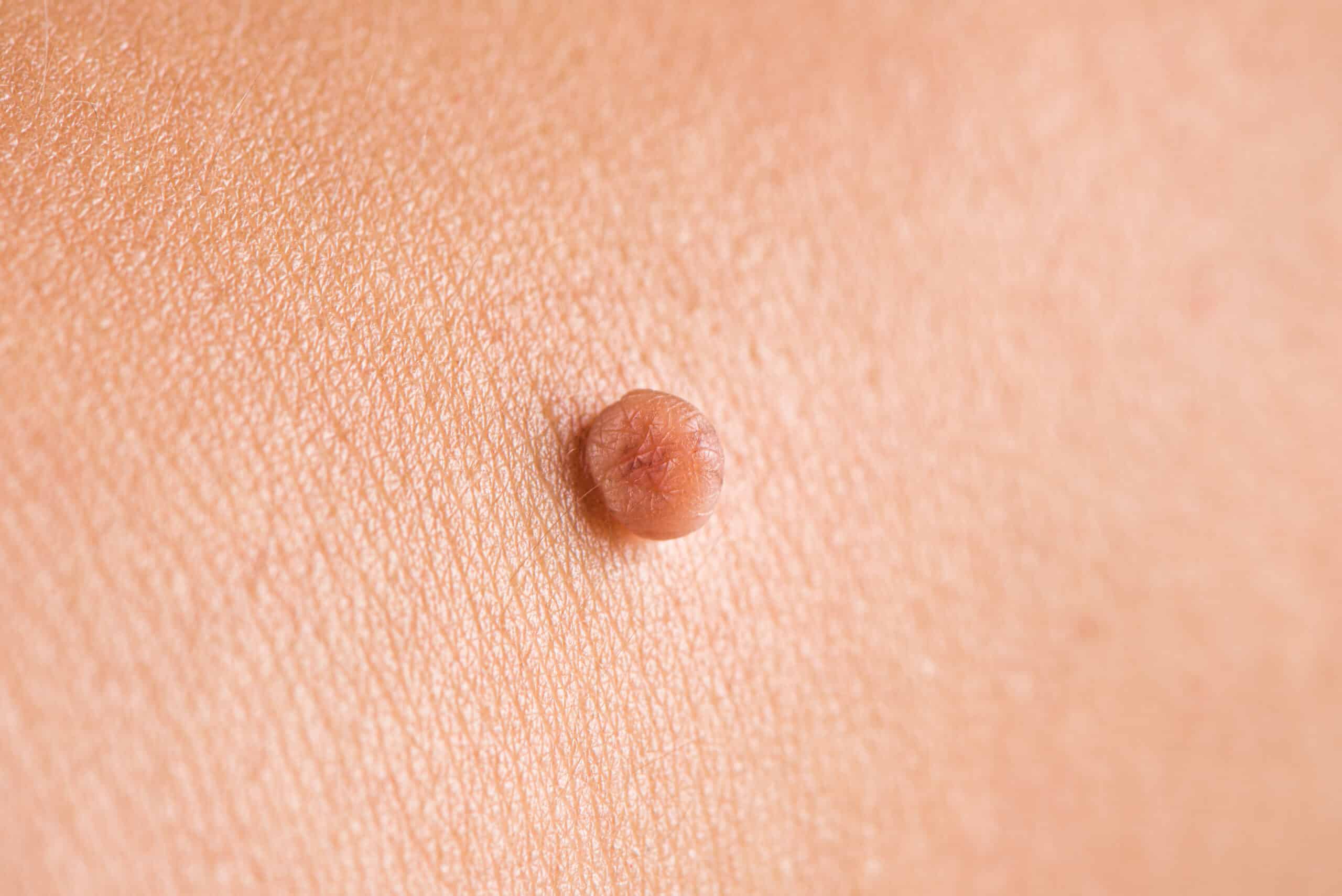
Skin tags are extremely common and almost always harmless. They are also one of the most straightforward skin concerns to treat, which is why so many people choose to have them removed when they become a nuisance or affect their confidence. The important thing is to have them removed safely, by someone who can confirm what they are first.
At our Mayfair clinic, consultant dermatologist Dr Jinah Yoo assesses skin tags before removing them, so that nothing is treated without proper examination. This guide explains what skin tags are, how they are removed, and what you can expect from the process.
What Are Skin Tags?
A skin tag is a small, soft growth of skin that usually hangs from the surface on a thin stalk. They are typically the same colour as your skin or slightly darker, and they range from tiny to a few millimetres in size.
Skin tags are benign, meaning they are not harmful and they are not contagious. They most often appear in areas where skin rubs against skin or clothing, such as the neck, underarms, eyelids and body folds. While they cause no medical problem, many people find them irritating, especially when they catch on jewellery, collars or during shaving.
Why Do Skin Tags Form?
Skin tags are thought to develop where there is friction, which is why they cluster in skin folds. Several factors make them more likely:
- Friction – repeated rubbing of skin against skin or clothing.
- Age – they become more common as we get older.
- Weight – more skin folds can mean more skin tags.
- Hormonal changes – they sometimes appear or increase during pregnancy.
- Genetics – a tendency to skin tags often runs in families.
Should Skin Tags Be Checked First?
Yes. Although skin tags are harmless, not every small growth is a skin tag. Other skin lesions can look similar, and only a proper examination can confirm what you actually have.
This is an important reason to have removal carried out by a dermatologist rather than assuming. A consultant dermatologist can distinguish a skin tag from other lesions and, if anything looks unusual, take the appropriate next step. The same careful approach applies to mole removal and wart removal, where accurate diagnosis matters just as much as the removal itself.
How Skin Tags Are Removed
Skin tag removal is quick and usually carried out in a single appointment. The method is chosen to suit the size and location of the tag:
- Cryotherapy – freezing the skin tag so that it falls away over the following days.
- Cautery or electrosurgery – using controlled heat to remove the tag and seal the area.
- Surgical snip – removing the tag with fine sterile scissors, often under local anaesthetic.
- Laser removal – precise removal that can suit certain tags, particularly in delicate areas.
Larger tags or those in sensitive areas, such as the eyelids, are treated with particular care and the most suitable technique selected at consultation.
Why You Should Not Remove Skin Tags Yourself
It can be tempting to try home or natural methods, but these are not recommended. Tying off, cutting or applying so-called natural remedies carries a real risk of bleeding, infection and scarring, and it removes the chance to have the lesion examined first.
Over-the-counter removal kits and DIY approaches can also damage the surrounding skin. Professional removal is quick, controlled and far safer, and it confirms the diagnosis at the same time.
What to Expect
Your appointment begins with a consultation, where the skin tags are examined and the most suitable removal method agreed. Many tags can be treated the same day. Depending on the method, a local anaesthetic may be used so the area is comfortable.
The procedure itself is usually short, even when several tags are removed. Afterwards you will be given simple aftercare advice to support healing. Most people return to normal activities straight away, with any small treated areas settling over the following days.
Risks and Considerations
Skin tag removal is a minor procedure, but a few points are worth knowing:
- Minor bleeding – common with surgical removal and easily managed.
- Small mark – the treated area is usually minimal, though some marking is possible.
- New tags – removing a skin tag does not stop new ones forming elsewhere, particularly in areas of friction.
These are discussed during your consultation so you know what to expect.
The Dr Jinah Yoo Approach
Skin tag removal may be simple, but it should still be done properly. As a GMC-registered consultant dermatologist, Dr Jinah Yoo brings the same standards to minor procedures as to complex ones:
- Every lesion is examined and confirmed before removal.
- The method is chosen to suit the size, number and location of the tags.
- Delicate areas such as the eyelids are treated with particular care.
- You receive clear aftercare to support comfortable healing.
You can read more about Dr Jinah Yoo and her work in medical dermatology.
Frequently Asked Questions
How much does it cost to get a skin tag removed in the UK?
Cost depends on the number of skin tags, their size and the removal method used. Because many tags can often be treated in one appointment, a clear price is provided after your consultation, once the tags have been assessed.
Do the NHS remove skin tags for free?
Skin tags are usually considered a cosmetic concern, so they are not generally removed on the NHS. Most people choose a private clinic for assessment and removal, which also allows the lesion to be examined by a specialist.
Can a GP cut off a skin tag?
A GP may not routinely offer skin tag removal, as it is often regarded as cosmetic. Removal by a dermatologist or trained clinician is safe and straightforward, and it should never be attempted at home with scissors or similar methods.
What naturally kills skin tags?
Home and natural remedies, such as tying off a tag or applying various creams, are not recommended. They can cause bleeding, infection or scarring, and they do not allow the lesion to be properly examined first. Safe, professional removal is the better option.
Do skin tags grow back after removal?
A skin tag that has been properly removed does not usually return in the same spot. However, removal does not prevent new tags from forming elsewhere, particularly in areas prone to friction. If you are prone to skin tags, you may find that new ones appear over time and can be treated as needed.
Does skin tag removal hurt?
Most methods are well tolerated, and a local anaesthetic can be used where appropriate so the area is comfortable. Any sensation is usually brief, and most people experience little discomfort afterwards.
Arranging a Consultation
If skin tags are bothering you and you are considering skin tag removal in London, the safest starting point is a quick assessment with a consultant dermatologist. You are welcome to book a consultation with Dr Jinah Yoo at our Mayfair clinic.