

XERF
Advanced Korean dual-frequency RF for deeper skin tightening, lifting and facial definition. XERF™ combines two monopolar RF frequencies, 6.78 MHz and 2 MHz, to deliver controlled thermal energy across different tissue depths, without needles or surgery.








Structural skin tightening at multiple depths.
What is XERF™
Two frequencies, one shot.
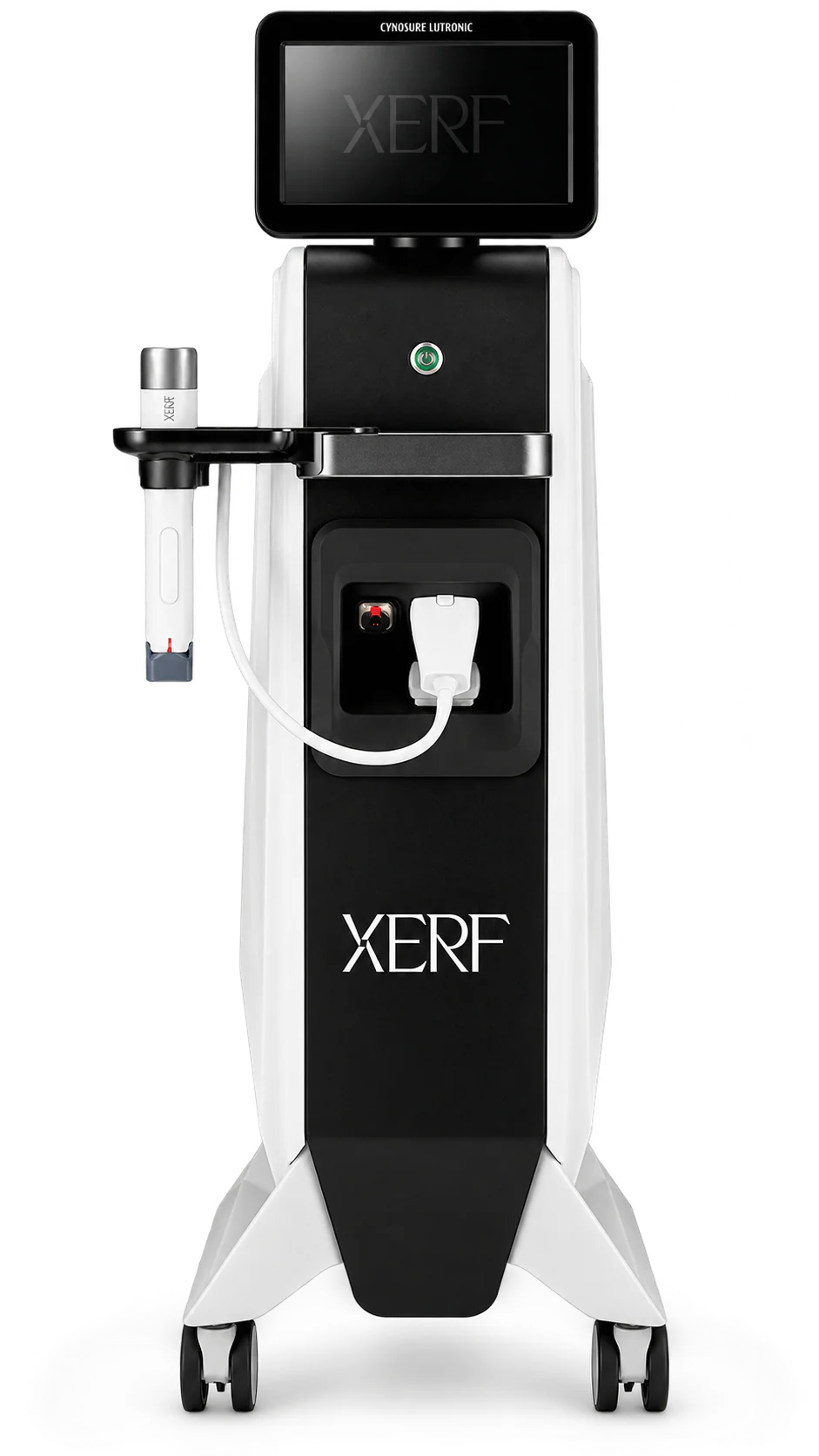
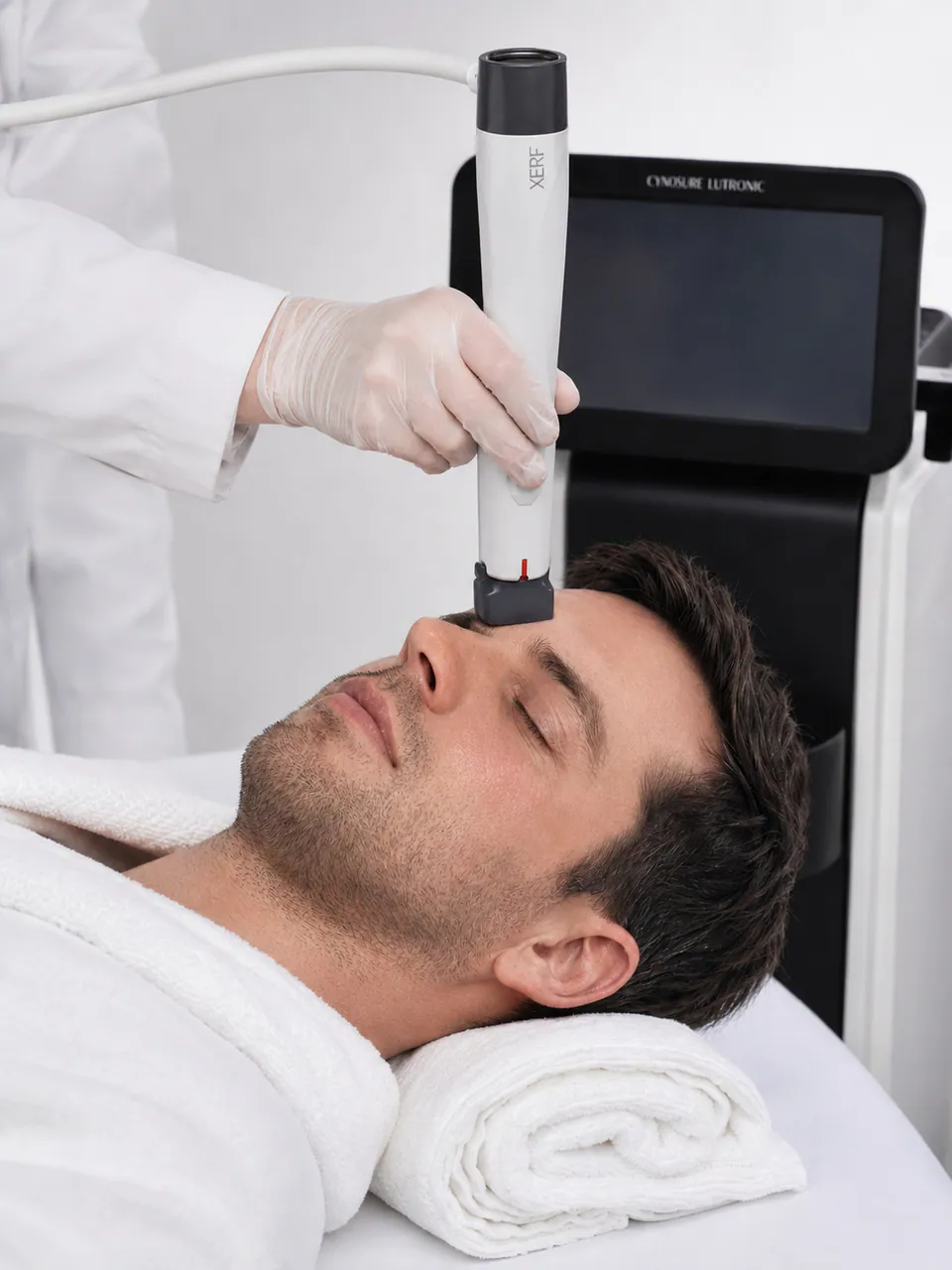
XERF is an advanced multifrequency monopolar radiofrequency system from Cynosure Lutronic. Unlike conventional monopolar RF systems that operate at a single frequency, XERF combines 6.78 MHz and 2 MHz RF energy within a single shot. The different frequencies influence how thermal energy is distributed through the tissue, enabling treatment across different depths.
Skin ageing does not occur at one level. Collagen within the dermis gradually declines, deeper connective tissues lose structural integrity and areas such as the cheeks, jawline and neck can begin to appear less defined. With three depth modes and ten intensity levels, treatment can be personalised according to facial anatomy, skin thickness and the areas requiring greater structural support.
How XERF™ works
Heat where it's needed.
XERF uses controlled monopolar radiofrequency energy to generate heat within targeted tissue, stimulating collagen contraction and subsequent remodelling. Its ability to modify both frequency and treatment depth allows the practitioner to tailor where that energy is concentrated.
XERF combines 6.78 MHz and 2 MHz frequencies, creating a broader pattern of energy delivery than a conventional single-frequency RF system. Preclinical research comparing the frequencies found that 2 MHz produced broader, deeper heating while 6.78 MHz produced more localised heating around fibrous structures. When used together, the dual-frequency approach produced collagen and elastin remodelling across dermal and subcutaneous tissue.
Shallow treatment primarily targets the dermal layer. Middle treatment extends further into superficial subcutaneous tissue. Deep treatment is designed to reach deeper structural tissue associated with facial laxity and lifting. This flexibility means different areas of the face do not need to be treated using identical parameters.
Controlled heating causes existing collagen fibres to contract while initiating biological processes associated with subsequent collagen remodelling. Rather than creating additional facial volume, the aim is to strengthen and tighten the patient's existing tissue structure over time. Clinical research on XERF has demonstrated improvements in facial laxity and lower-face lifting, although the available clinical evidence remains relatively new.
XERF uses WaveFit™ pulse technology to distribute RF energy across a controlled sequence of pulses rather than delivering it as one intense burst. At the same time, Integrated Cryogen Delivery (ICD) cools the skin surface while energy is being delivered beneath it. This combination is designed to improve comfort and protect the epidermis during treatment.
- Technology
- Dual-frequency monopolar RF
- Frequencies
- 6.78 MHz and 2 MHz
- Manufacturer
- Cynosure Lutronic, Korea
- Settings
- 3 depth modes, 10 intensity levels
- Comfort
- WaveFit™ pulses with cryogen cooling
- Skin types
- Broad range, assessed clinically
What can XERF™ treat
Laxity, support and definition.
By stimulating collagen remodelling at several tissue depths, XERF can help improve skin that has begun to appear looser or less supported.
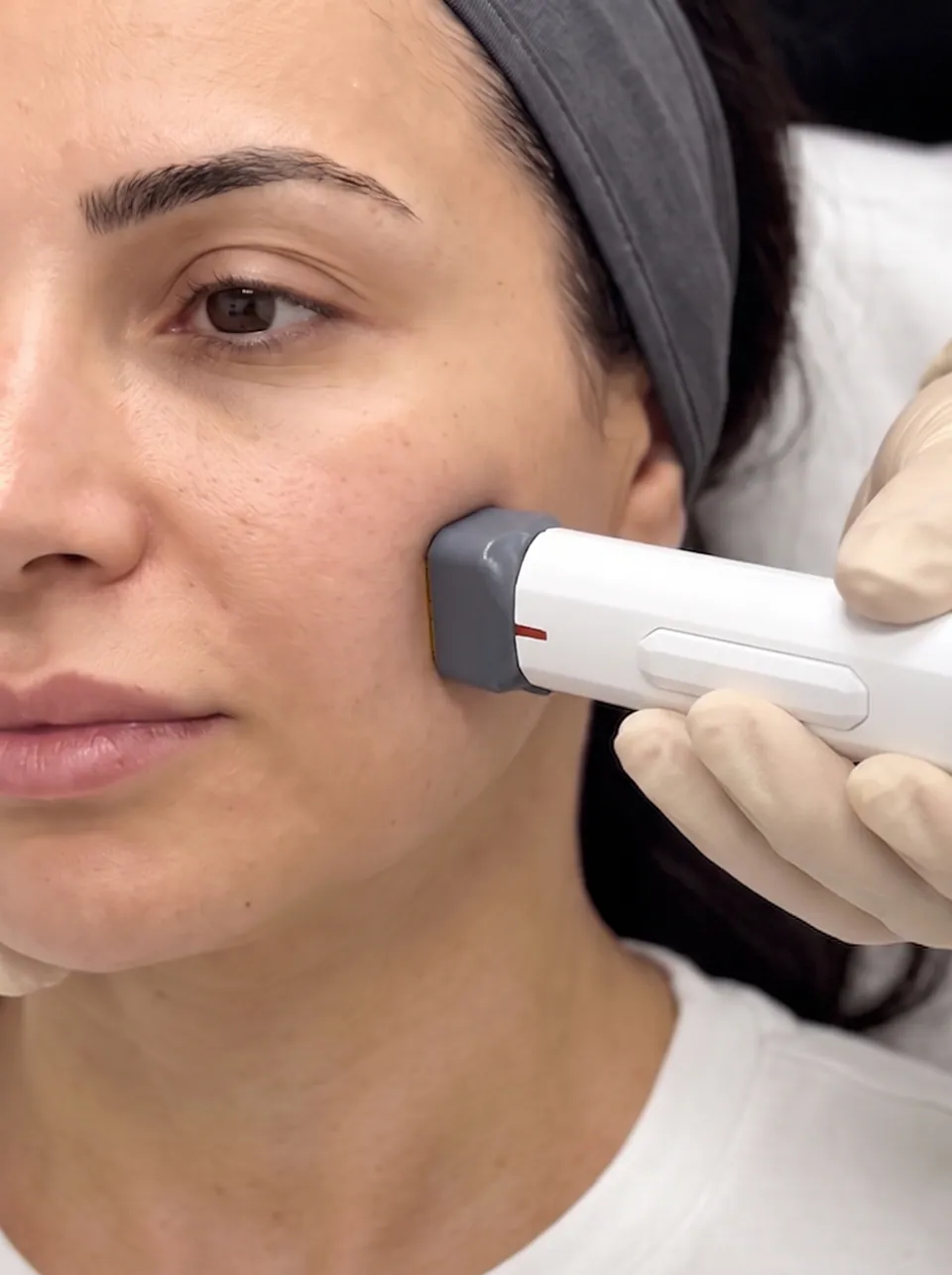
Loss of collagen and changes within the deeper supporting tissues can contribute to softening around the lower face. XERF can be concentrated through this area to support improved firmness and jawline definition.
The treatment can extend through the neck where appropriate, helping improve skin firmness and the appearance of mild laxity.
Treatment can be tailored to the brow and forehead to improve firmness and support a subtly lifted appearance.
Collagen remodelling within the dermal layers can help smooth skin texture and soften the appearance of fine lines.
By treating deeper tissue structures as well as the dermis, XERF can help restore definition where facial contours have gradually softened with age.
Areas we can treat with XERF™
Where it is used.
Treatment is adapted according to the patient's anatomy and areas of concern, rather than applying the same energy profile throughout the face.
To improve firmness and support the upper face.
To address loss of firmness and support more defined mid-face contours.
To target laxity and softening through the lower facial structure.
To improve firmness and create a more defined transition between the face and neck.
To tighten tissue beneath the chin and support lower-face definition.
To address mild-to-moderate laxity and reduced skin firmness.
A different approach to radiofrequency tightening
Supporting structure without adding volume.
Traditional monopolar RF technologies generally operate at a single frequency. XERF's defining feature is its use of two RF frequencies within the same system, together with selectable shallow, middle and deep treatment modes. Treatment can be adjusted according to skin thickness, treatment area, anatomy and degree of laxity rather than following a uniform protocol.
XERF does not use filler and does not create facial volume by injecting material beneath the skin. Instead, it works with the patient's existing tissues. Where volume loss, pigmentation, texture or other concerns are also present, XERF may form one part of a broader treatment plan using other technologies available at the clinic.
- Facial or neck laxity
- Softening of the jawline
- Early jowling
- Reduced cheek definition
- Brow laxity
- Fine lines and wrinkles
- Loss of skin firmness and elasticity
- XERF uses radiofrequency, not laser light
- Designed to be performed without numbing cream; sensitivity varies
- Can be used across a broad range of skin tones
- No filler or added volume
- Not equivalent to a surgical facelift
- Best suited to mild-to-moderate laxity; suitability is confirmed at consultation
Why choose Dr Jinah Yoo
Four things we insist on.
Skin laxity can have different causes and occurs differently across the face. Treatment is planned according to facial anatomy, skin quality and the depth at which support has changed.
Dr Jinah Yoo combines Korean and UK dermatology expertise with access to advanced technologies developed across Korea and internationally, allowing treatments to be selected according to each patient's individual needs.
XERF's adjustable depths enable treatment parameters to be adapted throughout the face rather than treating every anatomical area in the same way.
The aim is to improve firmness and definition while preserving the patient's natural facial proportions and characteristics.
Your consultant
Led by Dr Jinah Yoo.

Dr Jinah Yoo
MBChB FRCP · Consultant Dermatologist · FounderDr Jinah Yoo is a Korean UK-trained consultant dermatologist who is the founder and medical director of Dr Jinah Yoo Dermatology. Dr Yoo has completed intensive dermatology training and developed special interest in cosmetic dermatology, hyperpigmentary disorders and skin lymphoma.
She attended numerous observerships at the World's leading pigment/cosmetic dermatology clinics in USA, Singapore and South Korea and established the first NHS-based hyperpigmentation service at Queen Elizabeth Hospital in 2018.
- GMC-registered consultant dermatologist
- Fellow of the Royal College of Physicians (FRCP)
- Distinction in MSc, University of Manchester
- MSc project work on facial hyperpigmentation
The clinic
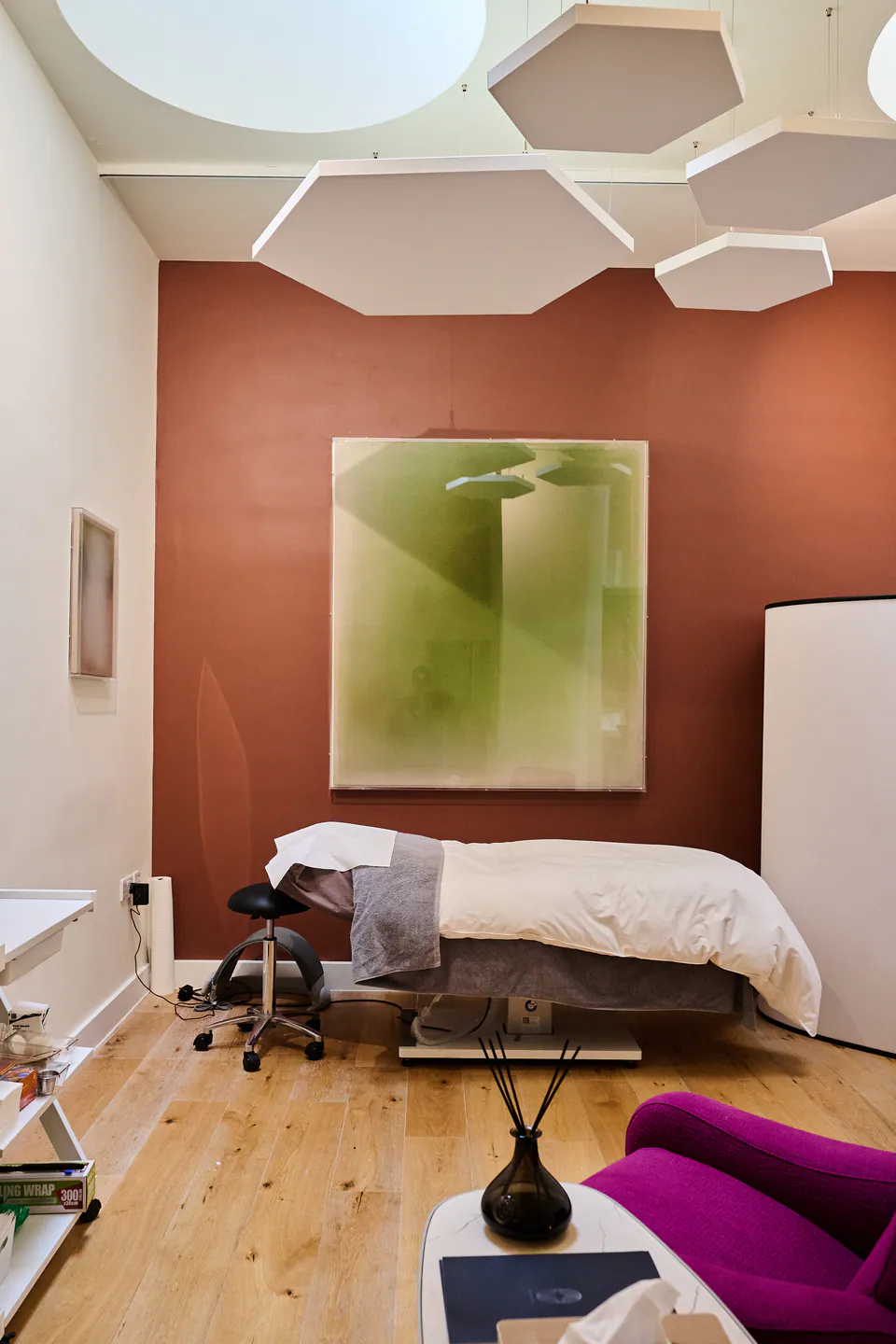
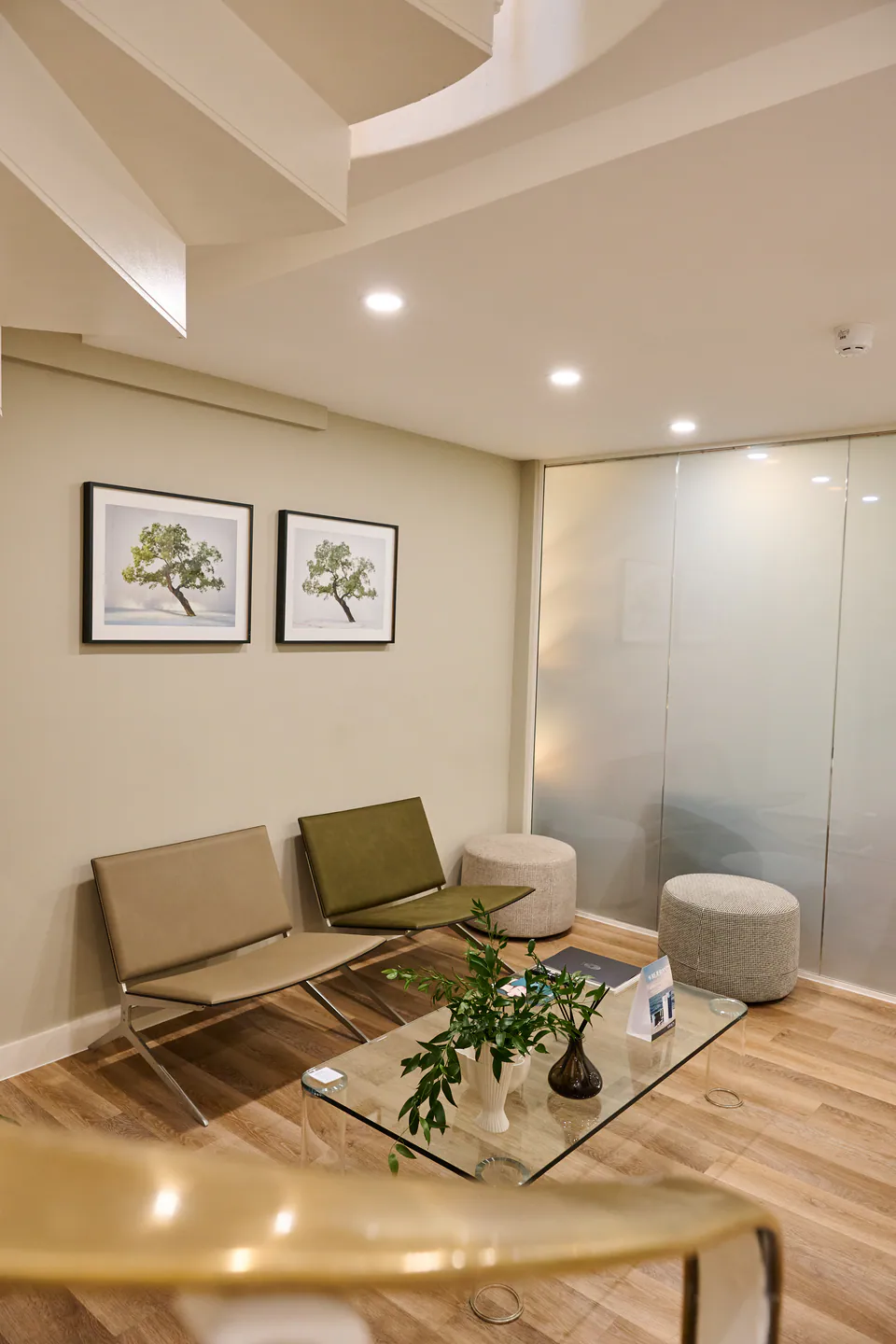
45 Albemarle Street, Mayfair.
Frequently asked questions
XERF™ FAQs.
XERF is a Korean-developed non-invasive monopolar radiofrequency treatment that combines 6.78 MHz and 2 MHz RF frequencies. It can deliver energy across shallow, middle and deeper tissue levels to improve skin firmness, facial laxity and definition.
The key difference is its dual-frequency technology. Many monopolar RF devices operate at one frequency, whereas XERF combines 6.78 MHz and 2 MHz and provides three selectable treatment depths. This gives the practitioner greater flexibility in controlling how energy is distributed through the tissue.
No. XERF uses radiofrequency energy, not laser light. RF creates controlled heating within targeted tissue to stimulate collagen contraction and remodelling.
Yes. Lower-face laxity, jawline definition and early jowling are among the principal concerns XERF is designed to address. A 2026 prospective multicentre study of 39 patients found significant short-term improvements following dual-frequency RF treatment for facial laxity and lower-face lifting.
Yes. XERF can be used across both the face and neck, with treatment depth and intensity adjusted according to the anatomy of each area.
Yes. Controlled RF heating affects existing collagen and triggers subsequent tissue remodelling. Preclinical histological research specifically evaluating the 6.78 MHz and 2 MHz frequencies used by XERF demonstrated collagen and elastin remodelling following dual-frequency treatment.
XERF has been specifically designed to be performed without topical anaesthetic. WaveFit™ energy delivery and Integrated Cryogen Delivery cooling help control tissue heating and maintain comfort at the skin surface. Individual sensitivity can still vary.
Because XERF uses radiofrequency rather than targeting melanin with light energy, it can be used across a broad range of skin tones. Cynosure Lutronic states that the technology can treat all skin types, although individual suitability should still be assessed clinically.
XERF can improve firmness and support a more lifted appearance, but it should not be presented as equivalent to a surgical facelift. It is a non-invasive treatment for patients looking to improve mild-to-moderate laxity and facial definition without surgery.
Next step
Book a consultation to discover a tailored skin treatment plan.
Your practitioner will assess where support has changed across your face and neck, and set XERF's depth and intensity for each area.