



Psoriasis
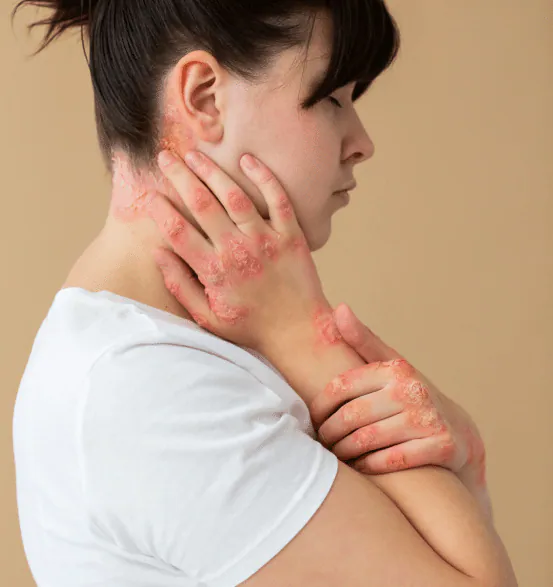
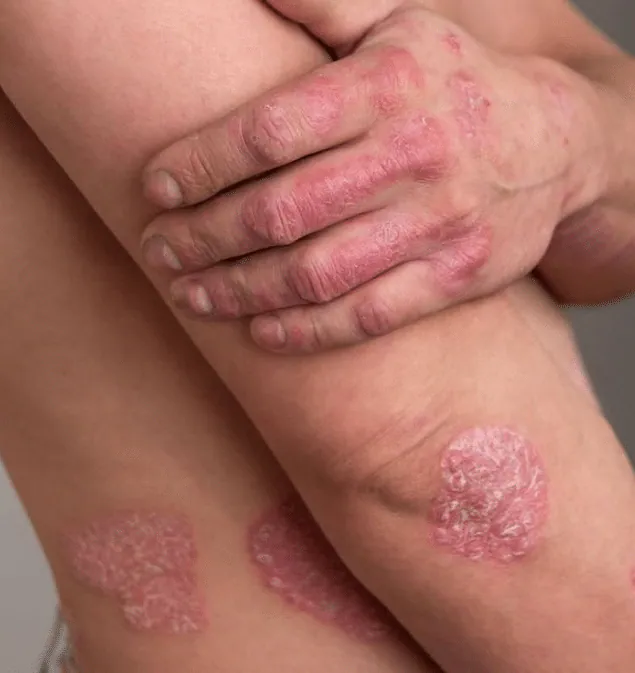
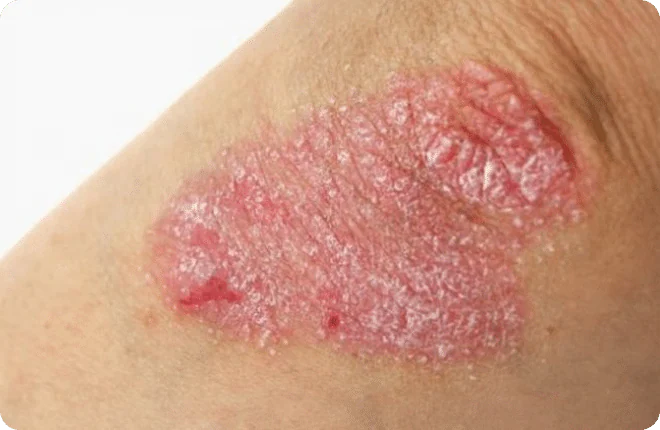
Psoriasis is a chronic autoimmune disease that impacts the skin, leading to rapid skin cell turnover. In this condition there is a buildup of thick, scaly patches that can vary in severity and location. Commonly, these patches are red, raised, and covered with silvery scales, in most cases accompanied by itching and pain.








Our approach
Consultant-led medical care.
We provide consultation and medical treatments for skin rashes/spots. Consultant dermatologists undergo intensive training to manage all skin conditions, including severe acne, eczema, psoriasis, allergy, urticaria etc. Sometimes, our procedural treatments like exosome, polynucleotide, plasma and LDM treatments can help to reduce skin inflammation and build stronger skin barrier.
What is psoriasis?
An overactive immune response.
Psoriasis is a result of an overactive immune system that mistakenly attacks healthy skin cells, triggering inflammation and excessive skin cell production. The condition can have genetic, environmental, or lifestyle triggers. Psoriasis can appear on any part of the body and may also affect the nails and joints, causing discomfort and, in some cases, impacting mobility. It is not contagious but requires proper medical attention to manage flare-ups effectively.
How we diagnose
Investigations to support the diagnosis.
Dermatology is a specialty with over 1500 potential diagnoses and it is even more important to seek advice from consultant dermatologists if you have genuine skin disease. We provide the whole range of investigations to support the diagnosis if required including skin biopsy, skin scraping, skin swab and blood test.
It involves numbing injection under the skin at the site of biopsy followed by taking a small skin sample: Curettage or shave biopsy is performed using a blade/curette to shave off the raised skin lesion and then burn off the bleeding vessels at the base. The initial wound would be a black scab which falls after 7-10 days. Punch biopsy is performed by using a device which looks like a small apple core (usually 4mm diameter) and takes a sample of the skin lesion/rash which can go down to a deeper layer of skin (dermis) and fat tissue to give us a full picture of the pathogenesis.
If there is a suspicious fungal/yeast infection causing the skin rash, skin scraping is performed and sent to the lab to see what type of fungus/yeast is causing the rash, which helps to target it with the right type of antifungal medication.
If there is a suspicious bacterial infection causing the skin rash, skin swab is performed and sent to the lab to see what type of bacteria is causing the rash which helps to target with the right type of antibiotics.
We have an affiliated lab where blood samples taken from our clinic are analysed. Blood tests are sometimes required to see any associated conditions which can cause the rash as well as to monitor bloods whilst on medication for the skin rash.
Why choose us
Care built around each patient.
Our medical director, Dr Jinah Yoo has spent years researching and refining her treatments to offer optimal solutions for various skin rashes.
We provide a comprehensive and systematic analysis of our patient's skin condition to ensure accurate and effective treatment.
Our goal is to provide best results by designing customised treatment plans that meet the needs of each patient's unique condition. We rely on a variety of advanced methods, we design a personalised programme for optimal outcomes. With our patient-centred approach, you can be certain that you will receive quality care for your individual needs.

Who it's for
Is this right for you?
- People seeking a personalised, targeted treatment plan to manage the symptoms of psoriasis.
- Patients looking to reduce the frequency and intensity of psoriasis flare-ups and improve overall skin health.
- Those who want to relieve persistent skin irritation and swelling associated with psoriasis.
- Psoriasis is a chronic condition: treatment aims to manage flare-ups and symptoms
- It is not contagious, but needs proper medical attention
- It can affect any part of the body, as well as the nails and joints
- Flare-ups can be triggered by stress, infections, certain medications, skin injuries or changes in weather
- The timeline for results varies with the severity of the condition and the treatment plan
Your consultant
Led by Dr Jinah Yoo.

Dr Jinah Yoo
MBChB FRCP · Consultant Dermatologist · FounderDr Yoo is a Korean, UK-trained consultant dermatologist and the founder and medical director of Dr Jinah Yoo Dermatology. Rashes are medical dermatology, and this is where a consultant's training matters most: reading how a condition presents across different skin tones, and knowing when to investigate further.
Where a rash needs referral or ongoing medical management, that is arranged rather than treated cosmetically.
- GMC-registered consultant dermatologist
- Fellow of the Royal College of Physicians (FRCP)
- Full range of diagnostic investigations available
- Experienced across all skin tones
The clinic
45 Albemarle Street, Mayfair.


Frequently asked questions
Asked before booking.
Psoriasis flare-ups can be triggered by factors such as stress, infections, certain medications, skin injuries, or changes in weather. Managing these flare-ups typically involves identifying personal triggers, using prescribed treatments, and adopting lifestyle changes to minimise their impact.
Yes, our clinic specialises in personalised psoriasis treatment. After a detailed consultation and diagnostic tests, we design tailored treatment programmes, advanced procedures such as laser therapy, or supportive skincare regimens to suit your specific condition.
All treatments at our clinic are carried out by experienced consultant dermatologists using proven, evidence-based methods. We utilise advanced medical technologies and comply with the highest safety standards to ensure that every patient receives effective and safe care.
The timeline for results varies depending on the severity of the condition and the treatment plan. Many patients notice improvements within a few weeks, but optimal results are often achieved with consistent treatment and follow-ups over a longer period.
Next step
Bring your flare-ups under review.
Book a consultation with a consultant dermatologist to assess your psoriasis, arrange investigations where needed and agree a plan to manage your symptoms.